
Gynaecomastia

Understanding Gynaecomastia
Gynaecomastia is the enlargement of breast tissue in males. All males have a very small amount of breast tissue. There are many reasons why this tissue can become enlarged.
Many reasons are normal changes that occur throughout one's life and are a result of normal development and ageing, and are self-limiting. In some instances, the breast enlargement can be associated with underlying medical conditions that need to be treated.
What Causes Gynaecomastia?
Gynaecomastia is the result of enlargement of breast tissue within a male breast.
Normally, oestrogen levels are low in males. However, if there is an imbalance in hormones and the oestrogen levels are elevated, or the ratio of oestrogen to testosterone is elevated, the breast tissue can enlarge.
Gynaecomastia can result from the following causes:
Normal physiologic changes (normal body processes)
Hormone imbalance (testosterone/oestrogen)
Medical conditions
Medications
Supplements/steroids
Normal Physiologic Gynaecomastia
Gynaecomastia can occur at various times throughout one's life and is normal and does not necessarily need treatment.
Groups this affects include:
Newborns
Female hormones can be passed to the unborn baby via the mother's placenta. In these circumstances, normal breast enlargement occurs and lasts for several weeks until the hormones are removed from the baby.
This is not a problem that requires any treatment.
Adolescents
This can occur from around the age of 10 and usually settles on its own by adulthood. This is a self-limiting condition.
However, due to body image concerns, surgery is sometimes indicated.
Elderly
As one ages, there is a natural decline in testosterone levels and an increase in oestrogen levels due to increased body fat. This results in gynaecomastia in the elderly.
Underlying Medical Conditions
In a small number of cases (10–20%) there may be a serious underlying medical condition that is causing the gynaecomastia.
Before any surgery is undertaken, these conditions need to be excluded.
If an underlying medical condition is detected, then your management will be guided towards treating the condition rather than treating the gynaecomastia. In some instances, the gynaecomastia will resolve when the underlying medical condition is treated.
Possible underlying medical conditions causing gynaecomastia include:
Liver disease
Testicular cancer
Kidney disease
Ulcerative colitis
Malabsorption conditions
Adrenal cancer
Lung cancer
Medications Causing Gynaecomastia
Unfortunately, there are a large number of medications that patients are prescribed for many common medical conditions that may have a side effect of causing gynaecomastia.
Your GP will be aware of these and will often warn you of this prior to prescribing the drug.
Some drugs are essential and cannot be stopped. In these circumstances, surgical intervention is likely to be recommended.
In other cases, the drugs are not essential, such as steroids used for muscle bulking, and treatment would be directed towards stopping the drug and monitoring what then occurs.
Medications that can result in gynaecomastia may include:
Anabolic steroids
Testosterone deprivation medication – as treatment for prostate cancer
Fluid tablets (spironolactone)
Blood pressure medication (verapamil, nifedipine, verapamil)
Foods – some foods contain phytoestrogens
Can Gynaecomastia be Treated Without Surgery?
Gynaecomastia is not a dangerous condition and, as such, does not have to have surgical correction.
If the underlying cause is due to a medication or medical condition, then the management will be directed towards that condition.
If the gynaecomastia is due to excess oestrogen or a deficiency in testosterone, then the gynaecomastia may be managed by adjusting the hormone levels.
Low testosterone can be adjusted by regular testosterone injections, whereas oestrogen levels can also be lowered with medication. In these circumstances, you may be referred to an endocrinologist.
Gynaecomastia that occurs naturally or due to a condition or medication that cannot be stopped may be treated with surgery.
The reasons for offering surgery are usually due to body image or discomfort. The breast tissue can become painful and surgery is required.
What is Involved in Gynaecomastia Surgery?
Most gynaecomastia surgery can be performed as a day case under a general anaesthetic.
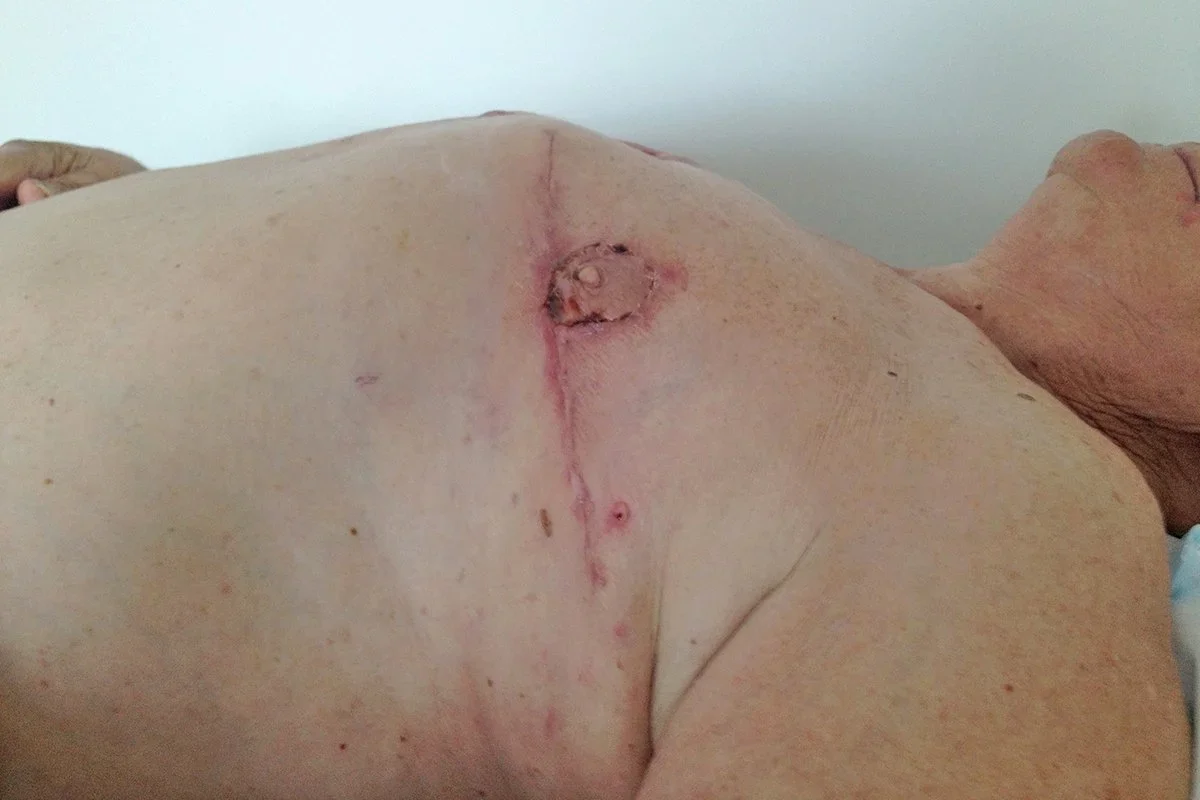
The operation involves what is known as a subcutaneous mastectomy for male gynaecomastia. This surgery involves removal of all breast tissue on the chest, leaving normal body fat so that the chest contour returns to a normal flat shape.
The operation is performed via a circular incision around the nipple itself. Through this small window, the entire breast tissue is removed.
Under the nipple, it is common for a small amount of breast tissue to be left behind. This is to avoid a collapsed divot with a sunken nipple that can occur if excessive tissue is removed.
On the other hand, if not enough tissue is removed, then a recurrence of the gynaecomastia is more likely.
Severe Gynaecomastia
In severe forms of gynaecomastia, there is also an excess of normal skin.
If the excess skin is not removed at the same time, the final result will be poor, with floppy skin that fills with fluid.
In these cases, a different type of incision is required so that the amount of skin can be reduced. This surgery will also often require the nipple to be repositioned.
This is a more extensive operation for severe gynaecomastia and may even require a two-staged approach.
What are the Potential Complications?
Gynaecomastia surgery is a common operation performed by Dr Green and Dr Campbell, for which they have been well trained.
The vast majority of patients will follow the “usual” path of recovery and be discharged from hospital feeling well either on the same day or the following day, depending on the extent of the gynaecomastia.
Despite this, things may not always go according to plan and a small number of patients may experience a significant complication.
The information below will help you understand some of the possible problems that can result from having an operation on your breast. “Complications” are listed below. Some are common and others are less common but very important if they happen.
While the following list is a guide, it is not comprehensive.
If you would like more information after your consultation and reading this page, please feel free to discuss any issues with your surgeon.
Common (10–15% of cases)
Seroma formation
Bruising
Visible scar
Uncommon (up to 5% of cases)
Nipple numbness or increased sensitivity
Wound infection
Bleeding requiring a second operation
Poor cosmetic result – depression deformity
Recurrence of gynaecomastia
Rare but Important (up to 1% of cases)
Anaesthetic complications
Nipple necrosis (dead nipple)
Frequenty Asked Questions
-
No. Gynaecomastia is not a dangerous condition and does not necessarily require surgical correction.
If the underlying cause is due to a medication or medical condition, management will be directed towards that condition.
-
This depends on the cause. Gynaecomastia in newborns and adolescents is often self-limiting.
Adolescent gynaecomastia usually settles on its own by adulthood.
-
Yes. If gynaecomastia is due to a medication or medical condition, treatment can be directed towards the underlying cause.
If it is due to excess oestrogen or a deficiency in testosterone, the gynaecomastia may be managed by adjusting hormone levels.
-
Most gynaecomastia surgery can be performed as a day case under a general anaesthetic.
The operation involves removal of the breast tissue through a circular incision around the nipple. A small amount of breast tissue is commonly left beneath the nipple to avoid a collapsed divot or sunken nipple.
-
In severe forms of gynaecomastia where there is also excess skin, a different type of incision may be required so that the amount of skin can be reduced.
The nipple may also need to be repositioned. This is a more extensive operation and may require a two-staged approach.
-
Common complications include seroma formation, bruising and a visible scar.
Uncommon complications include nipple numbness or increased sensitivity, wound infection, bleeding requiring a second operation, poor cosmetic result or depression deformity, and recurrence of gynaecomastia.
Rare but important complications include anaesthetic complications and nipple necrosis.
Need Further Advice?
If you have gynaecomastia and would like further information, please discuss your concerns with your surgeon.
Your surgeon can assess the possible cause of the gynaecomastia and discuss whether treatment or surgical correction is appropriate for you.