
Breast Papillomas
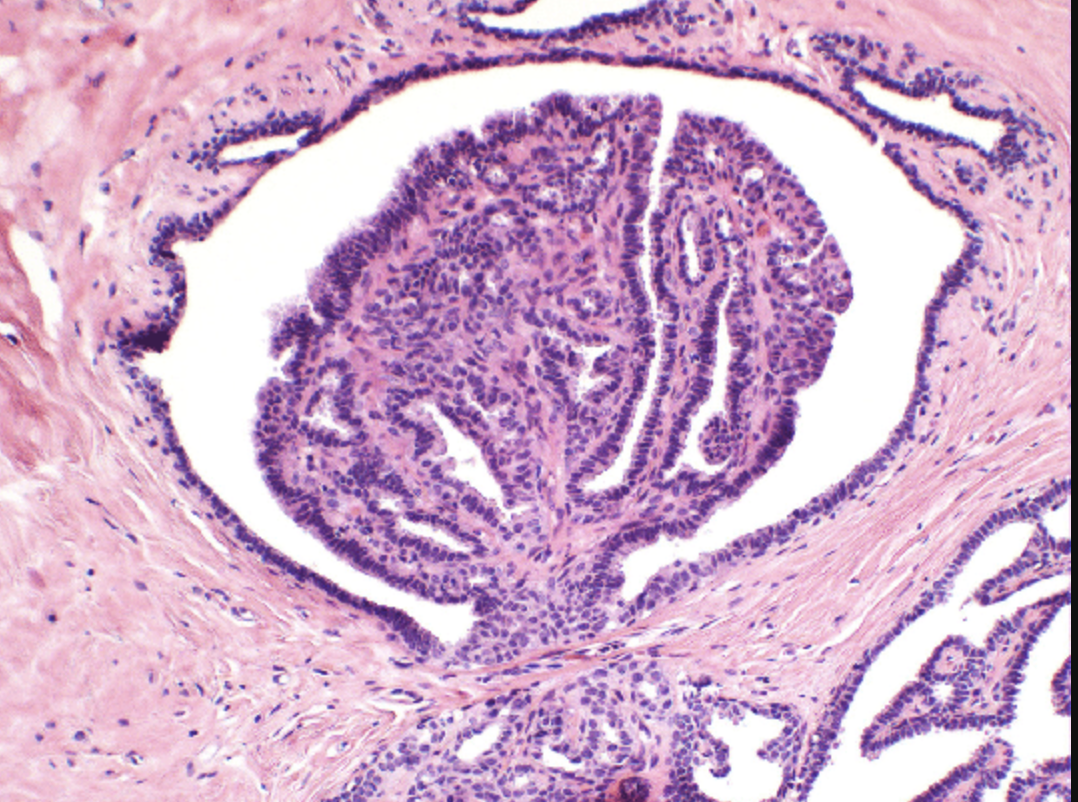
What is a Breast Papilloma?
A breast papilloma is a small, non-cancerous (benign) growth that forms within the breast's milk ducts. These growths are made up of glandular and fibrous tissue and are similar to skin warts, although they develop inside the breast rather than on the skin.
Breast papillomas can occur in one or both breasts and are usually not harmful. However, in some cases they may increase the risk of developing breast cancer or cause symptoms that require treatment.
Types of Breast Papillomas
Solitary Intraductal Papilloma
Usually found within the larger milk ducts near the nipple.
These papillomas commonly cause nipple discharge, which may be clear or blood-stained, and can sometimes be associated with a small lump near the nipple.
Multiple Papillomas
Multiple papillomas develop deeper within the breast and usually involve the smaller milk ducts.
They are less likely to cause nipple discharge but may be associated with a slightly increased risk of breast cancer.
Papillomatosis
Papillomatosis occurs when several small papillomas develop throughout the breast ducts.
The presence of atypical (abnormal) cells may slightly increase the risk of breast cancer.
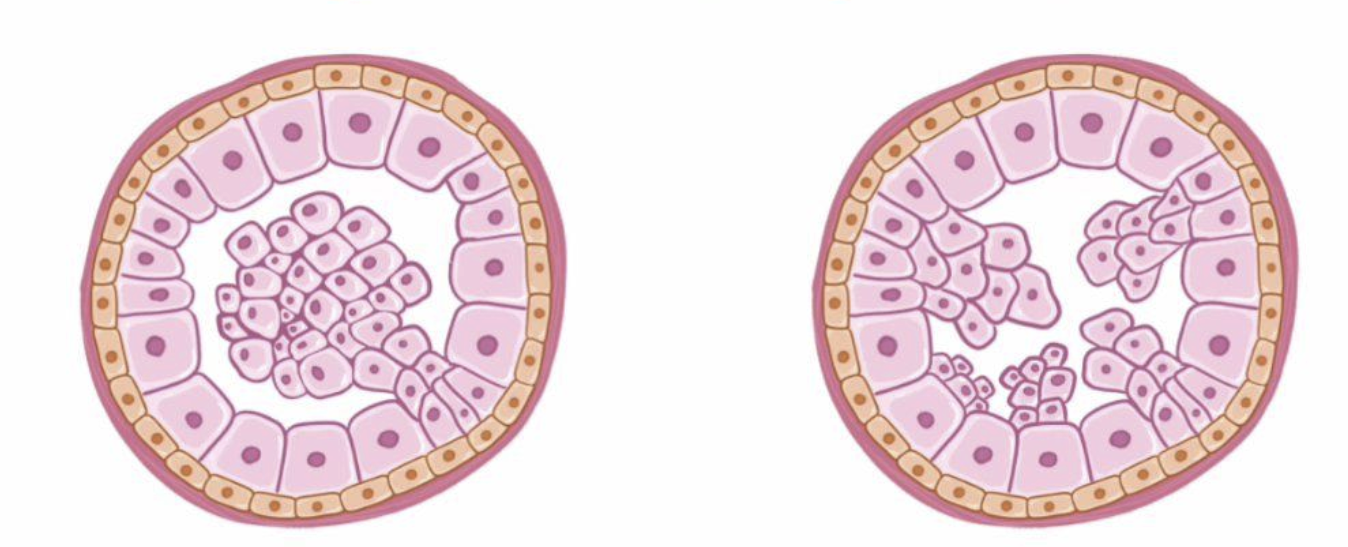
Left: Papilloma appearance on ultrasound.
Right: Papilloma following removal and microscopic examination.
Symptoms
Symptoms of a breast papilloma may include:
Nipple discharge (clear, sticky or blood-tinged)
A small breast lump, particularly near the nipple
Breast pain or tenderness
Changes to the nipple, including sensitivity or inversion
No symptoms at all, with the papilloma found incidentally during breast screening or investigations for another condition
Diagnosis
If you experience nipple discharge or discover a breast lump, your doctor may recommend several tests to confirm the diagnosis.
These may include:
A clinical breast examination
Mammogram
Breast ultrasound
Biopsy to confirm the diagnosis and identify any atypical or cancerous cells
Pathological examination of nipple discharge where appropriate
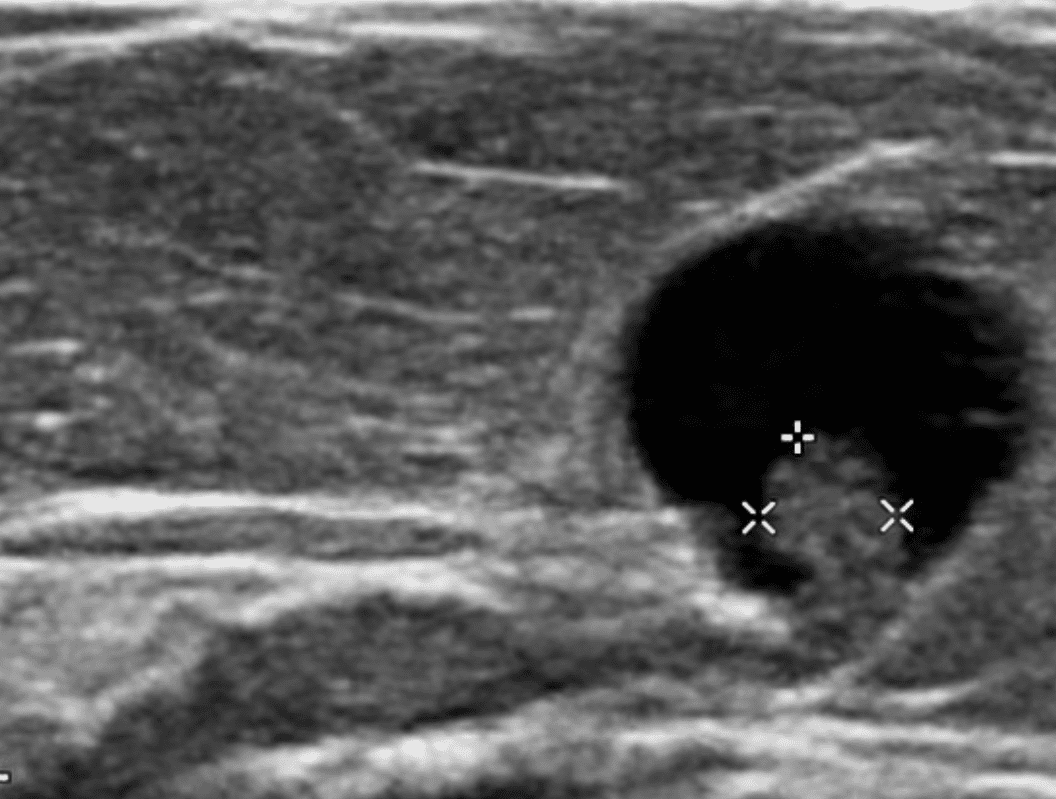
Left: Papilloma appearance on ultrasound
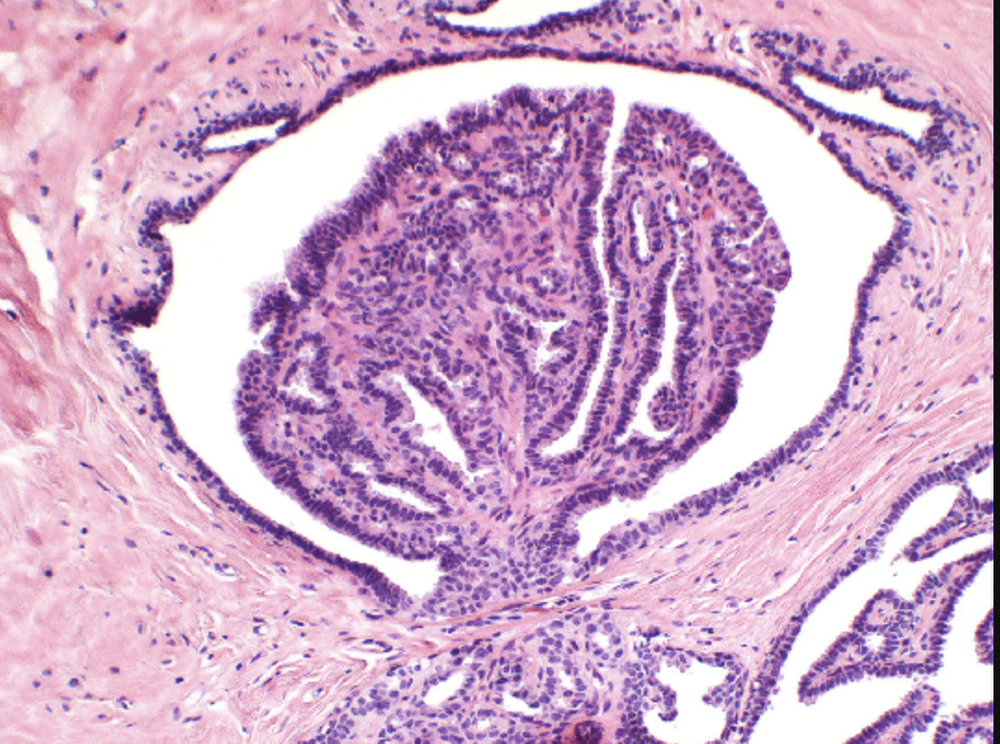
Right: once removed and under the microscope.
Treatment Options
Treatment depends on the size of the papilloma, your symptoms and whether any atypical cells are present.
Observation
If a papilloma is small, causing no symptoms and confirmed to be benign, your doctor may recommend regular monitoring with mammograms or ultrasound to check for any changes over time.
Surgical Removal (Excision)
If a papilloma is causing symptoms such as nipple discharge or pain, or if atypical cells are identified, surgical removal is often recommended.
This procedure, known as an excisional biopsy, involves removing the papilloma along with a small margin of surrounding tissue. It is typically performed under a general anaesthetic and involves minimal recovery time.
Alternatively, your surgeon may recommend a microdochectomy, where the milk duct containing the papilloma is removed.
Following surgery, the tissue is examined to confirm that it is benign and contains no cancerous or pre-cancerous cells.
Potential Risks & Complications
Although breast papillomas are usually benign, there are some potential risks to be aware of.
Increased Risk of Breast Cancer
Most papillomas are benign. However, multiple papillomas or papillomas containing atypical cells may slightly increase the risk of developing breast cancer. In these situations, your doctor may recommend regular follow-up.
Recurrence
In rare cases, papillomas can recur after they have been removed.
Surgical Risks
As with any surgical procedure, there are potential risks including infection, bleeding and scarring. These complications are uncommon and are usually minor.
Frequenty Asked Questions
-
No. A breast papilloma is a benign (non-cancerous) growth. However, some papillomas may contain atypical cells that can slightly increase the risk of developing breast cancer.
-
Most papillomas are benign and do not increase the risk of breast cancer. If you have multiple papillomas or atypical cells, your doctor may recommend regular monitoring as a precaution.
-
Papillomas generally do not disappear without treatment. They may remain stable in size or gradually enlarge over time. If they cause symptoms, surgical removal is often recommended
-
Breastfeeding is generally safe if you have a papilloma, unless it is causing significant symptoms. If surgery is required, your doctor may recommend temporarily stopping breastfeeding while you recover.
-
In most cases, removing a papilloma does not significantly alter the appearance of the breast. Your surgeon will aim to preserve as much normal breast tissue as possible.
Helpful Resources
Need Further Advice?
If you've noticed nipple discharge, discovered a new breast lump or have been diagnosed with a breast papilloma, the team at Brisbane Breast and Surgical Care can provide specialist assessment, diagnosis and personalised treatment recommendations.