
Breast Density
What Is Breast Density?
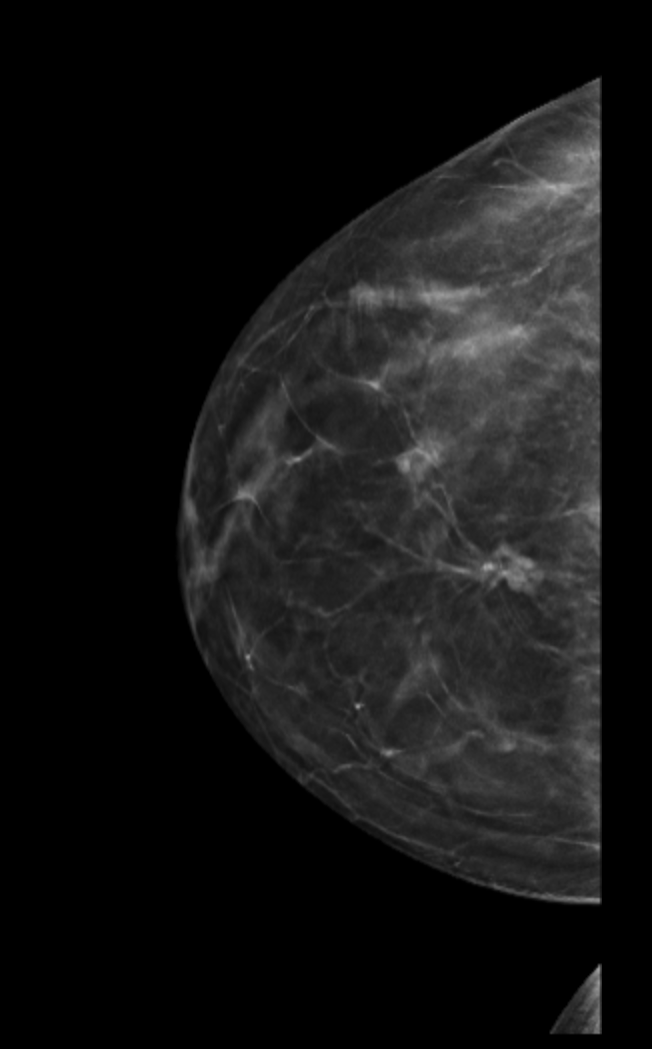
Breast density refers to the amount of fibrous and glandular tissue compared to fatty tissue in your breasts, as seen on a mammogram.
Breasts are considered dense if they have more fibrous and glandular tissue and less fatty tissue.
Breast density is a normal and common finding, with about 40–50% of women having dense breasts.
How Is Breast Density Determined?
Breast density is assessed by a radiologist reviewing your mammogram.
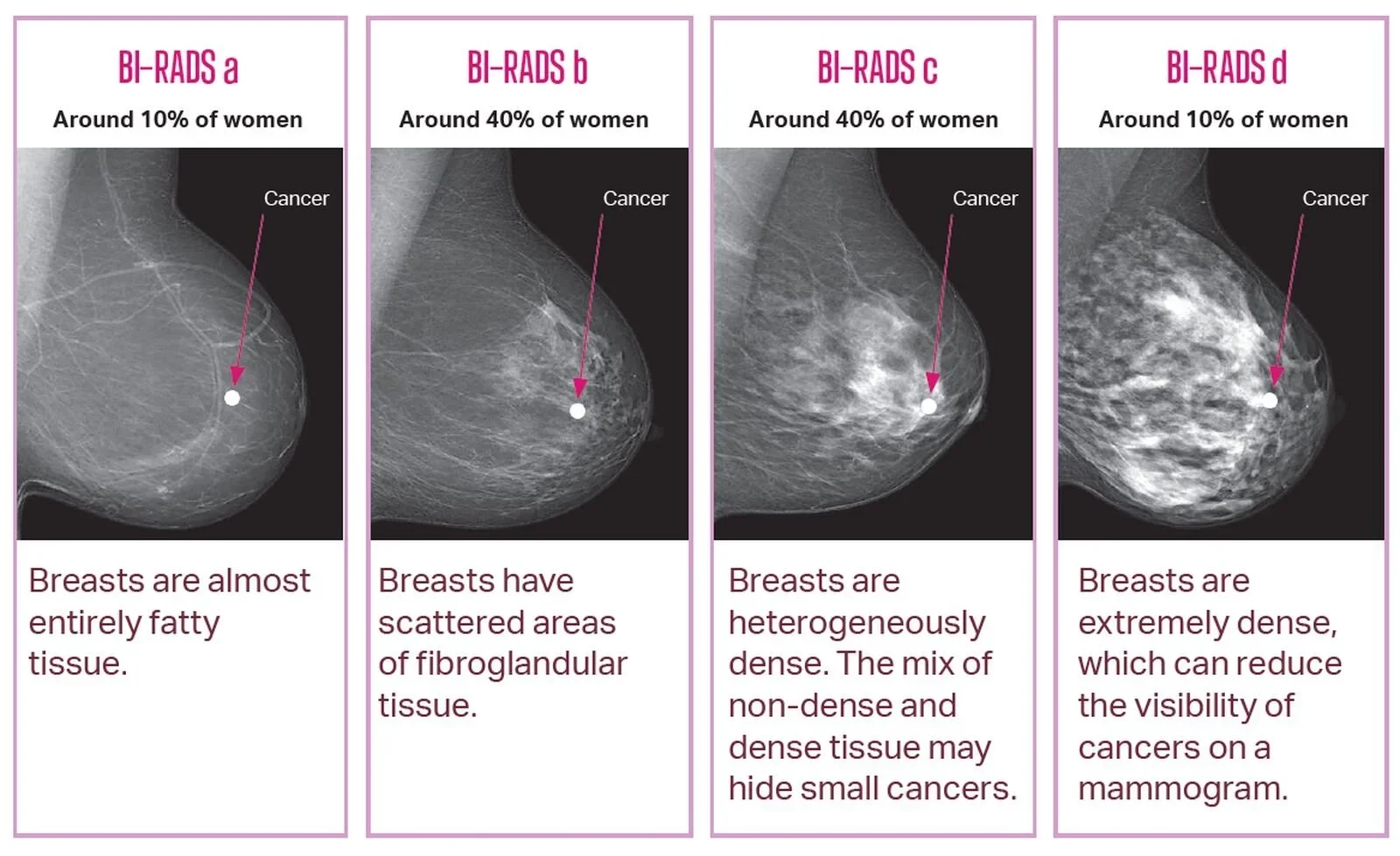
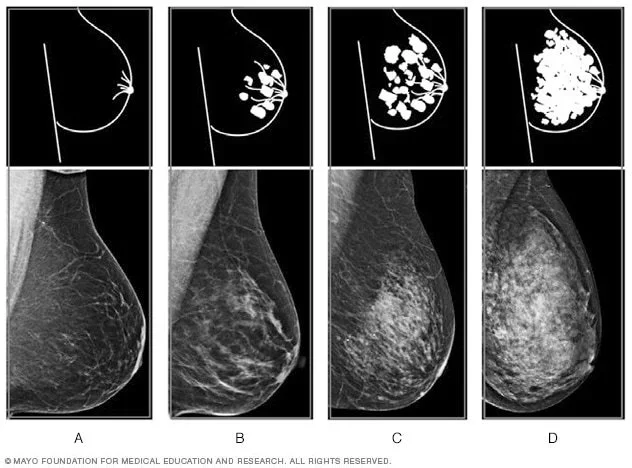
It is classified into four categories:
A: Almost Entirely Fatty
Minimal dense tissue.
B: Scattered Fibroglandular Densities
Some areas of dense tissue.
C: Heterogeneously Dense
Many areas of dense tissue, which can make it harder to see abnormalities.
C: Extremely Dense
A large amount of dense tissue, which may obscure findings on a mammogram.
Why Does Breast Density Matter?
Mammogram Accuracy
Dense tissue can make it harder to detect cancer on a mammogram because both dense tissue and cancer appear white, making abnormalities more difficult to spot.
Breast Cancer Risk
Women with dense breasts may have a slightly higher risk of developing breast cancer compared to those with less dense breasts.
Does Breast Density Mean I Will Get Breast Cancer?
No.
While breast density is one of many risk factors for breast cancer, it doesn’t mean you will develop it.
Other factors like family history, age, and lifestyle also contribute to your overall risk.
What Should I Do If I Have Dense Breasts?
Routine Screening
Continue with regular mammograms as recommended by your doctor.
Additional Screening
In some cases, your doctor may recommend additional imaging tests like a contrast mammogram or MRI to get a clearer picture of your breast tissue.
Lifestyle Choices
Maintaining a healthy weight, eating a balanced diet, exercising, and limiting alcohol intake can help reduce your overall breast cancer risk.
Discuss Your Risk
Talk to your doctor about your individual risk and whether additional screening or preventive measures are appropriate for you.
Frequently Asked Questions
-
Breast density refers to the amount of fibrous and glandular tissue compared to fatty tissue in your breasts, as seen on a mammogram.
Breasts are considered dense if they have more fibrous and glandular tissue and less fatty tissue.
-
Yes. Breast density is a normal and common finding, with about 40–50% of women having dense breasts.
-
Breast density is assessed by a radiologist reviewing your mammogram.
It is classified into four categories: almost entirely fatty, scattered fibroglandular densities, heterogeneously dense and extremely dense.
-
Women with dense breasts may have a slightly higher risk of developing breast cancer compared to those with less dense breasts.
-
No.
Breast density is one of many risk factors for breast cancer and does not mean you will develop it.
Other factors such as family history, age, and lifestyle also contribute to your overall risk.
-
Dense tissue can make it harder to detect cancer on a mammogram because both dense tissue and cancer appear white, making abnormalities more difficult to spot.
-
In some cases, your doctor may recommend additional imaging tests such as a contrast mammogram or MRI to get a clearer picture of your breast tissue.
-
Maintaining a healthy weight, eating a balanced diet, exercising, and limiting alcohol intake can help reduce your overall breast cancer risk.
-
Talk to your doctor about your individual risk and whether additional screening or preventive measures are appropriate for you.
Need Further Advice?
Breast density is normal and common.
It may affect how mammograms are interpreted and slightly increase breast cancer risk.
Regular screenings and open communication with your healthcare provider are essential for early detection and peace of mind.