
What Is the Thyroid and What Does It Do?
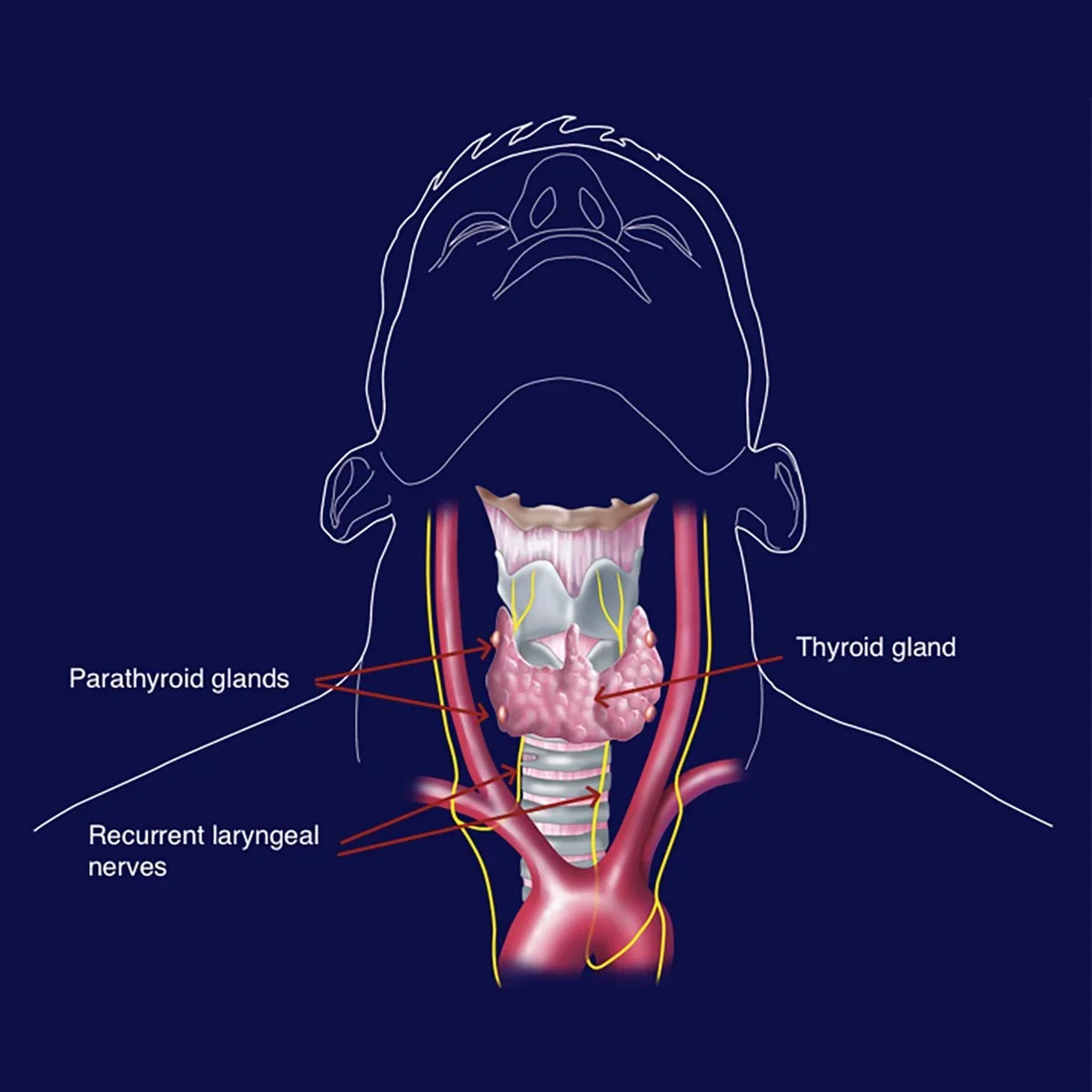
The thyroid gland is a large butterfly-shaped organ in the front of your neck, wrapping around the trachea (windpipe). It has two lobes (left and right) connected by a small bridge called the Isthmus, each about 5x3x2 cm in size.
Its main job is to produce the hormone Thyroxine (T4), which is converted to its active form, T3, outside the thyroid. These hormones are essential for controlling your metabolism.
The levels of T4 and T3 are tightly regulated, with the brain constantly monitoring and adjusting their production through a signal called Thyroid Stimulating Hormone (TSH).
Iodine is vital in your diet for making these hormones, known as thyroid hormones, which are assessed through blood tests.
Another hormone produced is Calcitonin, which helps lower calcium levels in the blood by moving it into the bones. This works against Parathyroid Hormone (PTH), produced by four parathyroid glands next to the thyroid, which increases calcium levels.