
Triple-Negative Breast Cancer

Understanding Triple-Negative Breast Cancer
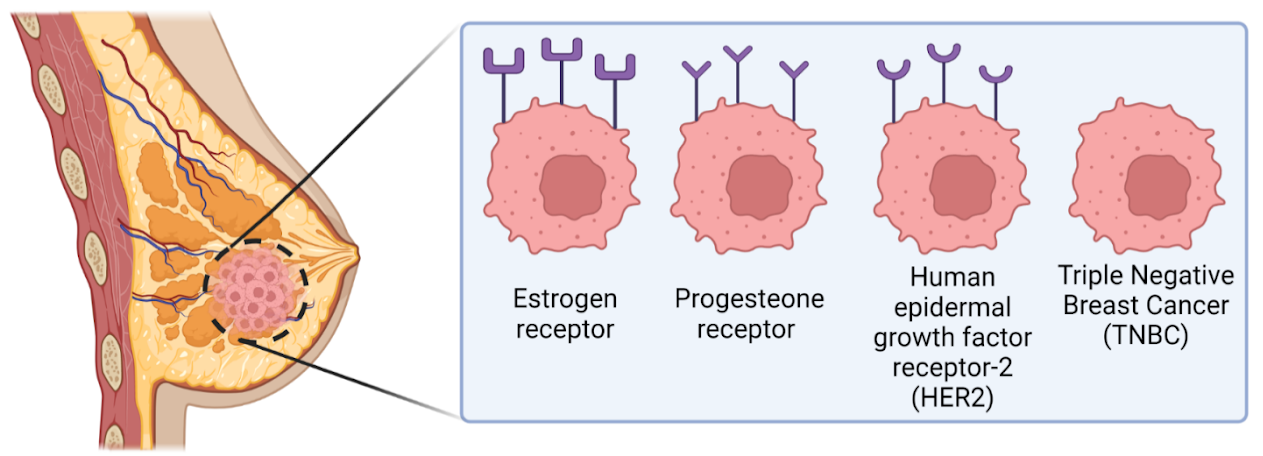
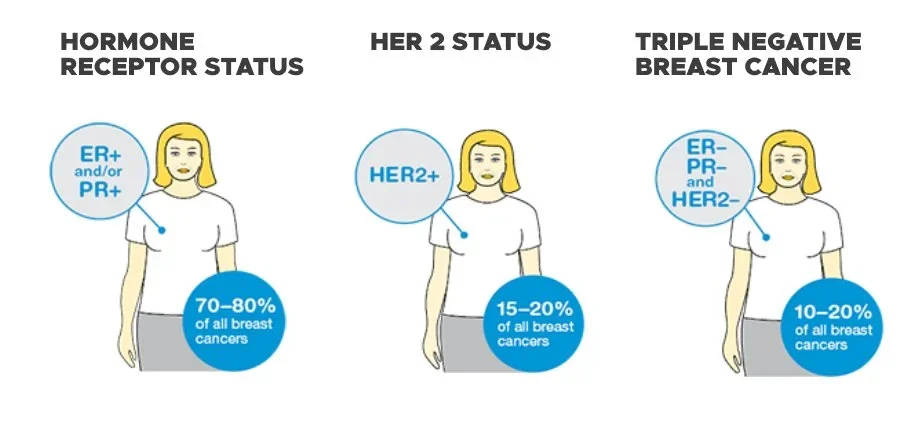
Triple-Negative Breast Cancer (TNBC) is a type of breast cancer that does not have three common receptors known to fuel most breast cancers.
Unlike other breast cancers, TNBC cells lack:
Estrogen receptors (ER)
Progesterone receptors (PR)
Human epidermal growth factor receptor 2 (HER2)
Because TNBC does not have these receptors, it does not respond to hormonal therapies like some other breast cancers, and treatment often requires different approaches.
Who is at Risk?
TNBC can affect anyone, but some factors may increase the risk, such as:
Age: TNBC is more common in women under 50.
Ethnicity: African American and Hispanic women have a higher risk.
Genetics: People with BRCA1 gene mutations are more likely to develop TNBC.
How is TNBC Diagnosed?
Diagnosis of TNBC involves:
Breast Examination
Your healthcare provider will examine your breast for lumps or changes.
Mammogram
A type of X-ray that can reveal unusual growths or changes.
Ultrasound or MRI
These imaging tests provide more detailed pictures.
Biopsy
A small tissue sample from the lump is tested to determine the type of breast cancer.
Treatment Options for Triple-Negative Breast Cancer
TNBC treatment is often more aggressive than other types of breast cancer due to its unique characteristics.
The primary options include:
Surgery
Lumpectomy
Removal of the tumour and a small amount of surrounding tissue.
Mastectomy
Removal of one or both breasts, especially if cancer is more widespread.
Lymph Node Removal
May be recommended if there is evidence the cancer has spread.
Chemotherapy
Chemotherapy is often a cornerstone of TNBC treatment.
It may be used before surgery to shrink the tumour or after surgery to prevent recurrence.
Radiation Therapy
Radiation may be recommended after surgery to target any remaining cancer cells in the breast or surrounding areas.
Clinical Trials and Immunotherapy
Some patients may be eligible for clinical trials testing new therapies, such as immunotherapy, which is designed to harness the body's immune system to target cancer cells.
Managing Life with TNBC
Side Effects of Treatment
TNBC treatments may cause side effects, including fatigue, nausea, hair loss and mood changes.
Speak with your healthcare team for ways to manage these effects.
Follow-Up Care
Regular follow-up visits with your healthcare team are essential for managing recovery and monitoring any signs of recurrence.
Follow-up care may include imaging tests, physical exams and blood tests.
Lifestyle Support
Regular exercise, a balanced diet and stress management practices can help you maintain energy and emotional well-being during and after treatment.
Support and Resources
Dealing with TNBC can be challenging, but you are not alone.
Support Groups
Connecting with others who have TNBC can provide emotional support.
Cancer Support Services
Many hospitals offer services such as counselling, nutrition support and physical therapy.
You will have a Breast Care Nurse as part of your journey through breast cancer treatment.
Their role is to guide you through the maze of appointments and treatments, to be a source of emotional and physical support and your point of contact for questions and concerns now and in the future.
Questions for Your Doctor
You may wish to ask your healthcare team:
What stage is my TNBC, and what does this mean?
What treatment options are best for my situation?
What are the potential side effects of my treatment?
Are there clinical trials that I should consider?
Frequently Asked Questions
-
Triple-Negative Breast Cancer (TNBC) is a type of breast cancer where cancer cells lack three common receptors known to fuel most breast cancers: estrogen receptors (ER), progesterone receptors (PR) and human epidermal growth factor receptor 2 (HER2).
-
It is called triple-negative because the cancer cells do not have estrogen receptors, progesterone receptors or HER2 receptors.
Because TNBC does not have these receptors, it does not respond to hormonal therapies like some other breast cancers, and treatment often requires different approaches.
-
TNBC can affect anyone, but it is more common in women under 50.
African American and Hispanic women have a higher risk, and people with BRCA1 gene mutations are more likely to develop TNBC.
-
Diagnosis involves a breast examination, mammogram, ultrasound or MRI and a biopsy.
The biopsy is used to determine the type of breast cancer.
-
Treatment options include surgery, chemotherapy and radiation therapy.
Some patients may also be eligible for clinical trials testing new therapies, such as immunotherapy.
-
Chemotherapy is often a cornerstone of TNBC treatment.
It may be used before surgery to shrink the tumour or after surgery to prevent recurrence. -
Surgical options may include lumpectomy, mastectomy and lymph node removal, depending on the individual circumstances and whether there is evidence that the cancer has spread.
-
TNBC treatments may cause side effects including fatigue, nausea, hair loss and mood changes.
Your healthcare team can provide advice about ways to manage these effects.
-
Support groups can connect you with others who have TNBC and provide emotional support.
Many hospitals also offer services such as counselling, nutrition support and physical therapy.
You will also have a Breast Care Nurse as part of your journey through breast cancer treatment, who can provide emotional and physical support and be your point of contact for questions and concerns.
Helpful Resources
Need Further Advice?
Every TNBC journey is unique, and your healthcare team is here to guide you through it.
With the right support and resources, many people with TNBC lead healthy lives after treatment.